
Almost everyone knows today what migraine is, but for those who suffer from migraines this disease brings real pain. A person seems to fall out of life, since everything is focused on severe pain. Attacks can last from several hours to several days. At this time, the patient is completely isolated from work, normal life. The only desire is to ease the symptoms. What is migraine?
What is migraine
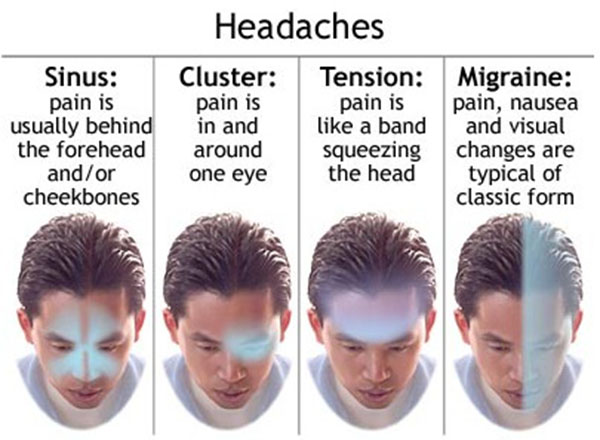
Migraine headache, which is localized on one side of the head. May be medium to high intensity. Often a headache is accompanied by pulsation, nausea, vomiting, photophobia, hypersensitivity to smells and sounds. Severe headache for 3 days or more must be diagnosed in order to exclude serious diseases of the brain.
There are migraines without aura and with aura, which is manifested by short-term visual impairment. Aura – a premonition of an oncoming headache in the form of various symptoms. It can be observed both before and during the onset of migraine.
Symptoms of migraine aura:
• Bright spots or flashes in front of the eyes;
• Tingling in arms or legs;
• Slow speech;
• Involuntary movements, jerking of hands or feet;
• Short-term auditory hallucinations;
• Numbness on one side of the body or face.
In most cases, women with migraine suffer from the disease 2-3 times more often than men. Also, migraine can occur against a background of changes in the hormonal background, pregnancy.
Where is the migraine localized?
Migraine occurs in one hemisphere of the head or in part. When asked how to describe the nature of the headache, patients often answer: “It seems that the head is split into two parts.”
What symptoms can tell about a previous migraine
People who experience regular migraines may experience previous symptoms. For example, the following symptoms may occur within a few days:
• Frequent yawning;
• Constipation;
• Increased hunger;
• Frequent change of mood;
• Thirst;
• Frequent urination.
Why does migraine occur?
Doctors explain the appearance of migraines – a genetic predisposition. Especially often this disease is transmitted through the female line. At the genetic level, features of the functioning of the nervous system are transmitted.
Migraine occurs due to activation of the trigeminal nucleus, which leads to spasm. Then there is an expansion of the arteries of the brain, and after that – perivascular edema. All these processes cause a strong throbbing headache.
What causes migraine
Regular migraines can occur due to many factors. Medical experts divide these factors into 4 main groups:
1. Physiological
2. Psychological
3. Food
4. External
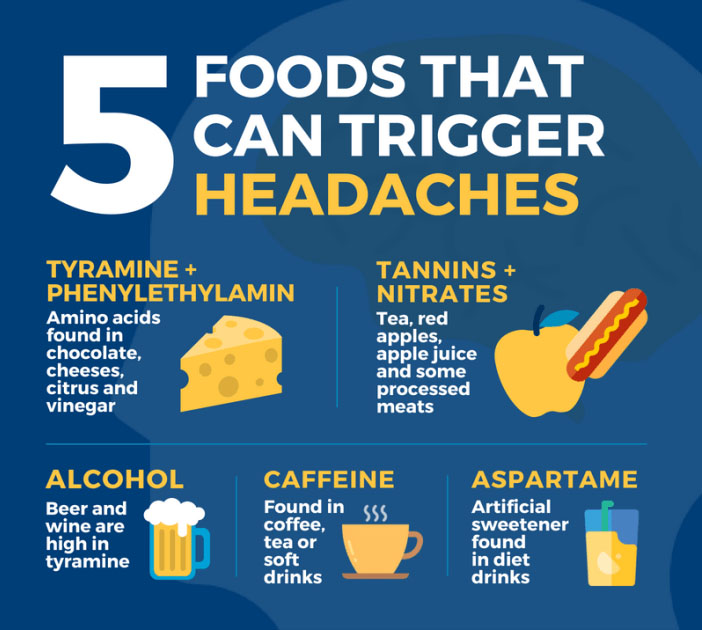
The physiological causes of migraines include mental overstrain, lack of sleep or frequent awakenings at night, changes in hormonal levels. Psychological stresses include stress and overwork at work (physical, emotional). Nutritional factors include eating foods that contain toxic substances. Thus, the body responds to intoxication. Doctors also talk about some foods that contain Tyramine:
• Legumes
• Pickles
• Spices
• Nuts
• Avocados and plums
• Bananas and citrus fruits
• Flour
• Smoked meat
• Milk products
• Alcoholic drinks
• Chocolate and coffee
External factors that trigger migraines: atmospheric phenomena, frequent changes in weather and ambient temperature, pungent odors, constant or periodic stay in a stuffy room.
In women, migraine can occur during pregnancy, lactation, menopause, and taking contraceptives.
Another hypothesis of the occurrence of migraine is the narrowing of the vascular lumen or, conversely, vasodilation.
When a doctor can diagnose a migraine
It is difficult to diagnose migraines directly through examination. The doctor may diagnose Migraine when other possible causes of severe headache are ruled out. To do this, you need to do an MRI of the brain.
How do migraines occur?
As mentioned above, a severe headache within 3 days can follow an aura that lasts from 10 to 30 minutes and a third of patients with migraines occur.
The next stage is directly a migraine attack or severe headache. Duration from several hours to several days. Usually the pain is localized on one side of the hemisphere, but it can be on both sides. Pain with high intensity begins to pulsate during movement or physical activity. During seizures, a person is unable to perform work or even household tasks, cannot drive a car. The patient has a desire to accept a prone position, to limit himself from sounds, smells and light.
After the attack phase, the resolution phase follows. It is characterized by a feeling of emptiness. The head becomes “heavy.” The patient feels overwhelmed, tired, irritated. This condition can last a day.
How to relieve migraines
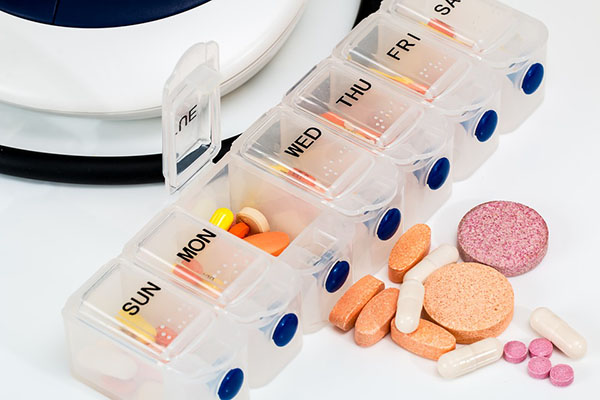
Migraine pain treatment consists of taking analgesics and combined caffeinated drugs. The dosage and type of medication should be selected by the doctor. Antiemetics will help relieve symptoms of nausea and vomiting.
In the event that analgesics and antiemetics do not have an effect, with a migraine attack, the doctor may prescribe medications for migraine. Medications can be taken according to the following schemes:
1. As soon as you feel the imminent symptoms of migraine or signs preceding it, you should take a medication. In this case, at least one dose should always be at hand.
Caution! Too frequent use of anti-migraine drugs can lead to withdrawal symptoms, so do not use them with ordinary headaches. Doctors do not recommend the use of drugs against migraine more often 2-3 times a week.
2. Preventive treatment of migraine involves the regular use of drugs to prevent migraines. May be prescribed if another type of treatment does not help. The type of drug and dosage must be prescribed by a doctor, so as not to cause addiction and withdrawal.
Migraine Treatment During Pregnancy
A particularly difficult problem is the appearance of migraine during pregnancy. Due to a change in the hormonal background, a woman can become a hostage to a constant headache. Headache treatment for migraines at home is complicated by the fact that you can not take most of the analgesics and drugs for migraines, as they can affect the fetus.
Headache treatment for migraine at home during pregnancy is possible only after the exclusion of secondary signs of migraine:
• High or low blood pressure
• Venous discirculation
• ICP
Treatment of pain with migraine in the expectant mother should be only those drugs that are allowed during pregnancy. Therapy may include magnesium drugs, NSAIDs (non-steroidal anti-inflammatory drugs), tricyclic antidepressants, beta blockers.
Migraine treatment
It is impossible to cure a migraine 100%, since it is a disease transmitted by inheritance. However, there are a number of preventative measures that will help to avoid factors leading to migraine.
1. Keep a migraine diary
In your personal diary, observe how often pain occurs, what intensity and duration they are, what you did the day before. After analyzing this data, you can find out what exactly leads to pain in your particular case.
2. Exclude foods that can lead to migraines (discussed above)
3. Sports, regular physical activity (not necessarily heavy)
4. Massage
Most often, experts recommend focusing on the cervical-collar zone: the area that most often causes poor blood supply.
5. Avoiding the so-called migraine triggers (causes that lead to an attack).

Eliminate stress, heavy physical exertion. Allow your body to get enough sleep at least 8 hours a day.
Our Mexican pharmacy offers migraine and analgesic medications that you can order with delivery to your address.